The Celtic Longboat is a four-person coxed rowing boat used for racing, training and recreation. Racing this type of boat has a long and interesting history on the West Wales coast.
Since the 1970s, local coastal villages have put up teams to compete for relatively large cash prizes in traditional pulling races. The longboats started in 1978 when Tom Sutton, working on Ramsey Island, St Davids, found the remnants of an Irish Curragh, a wooden-frame, tarred-skin rowing boat, washed up.
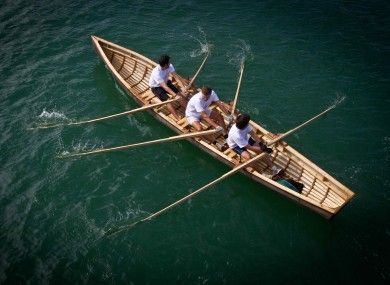
With friends Des Harries and Robin Pratt, he re-skinned the boat and entered the Solva Traditional Boat Rowing Race, coming second. They thought a fibreglass boat of the same shape would be faster. Des carved a timber plug and cast a mould for the first Pembrokeshire Longboat. In 1979 they won the Solva race, and interest in the new design grew into the Pembrokeshire Longboat League.
The original mould was sold to Cardigan in the early 1980s. The sport developed across Pembrokeshire and Cardigan, and the Welsh Longboat League Cymru formed to standardise boats and rules. The new one-design Celtic Longboat allowed crews to compete on level terms.
In 1996 Sportlot funding was sought for a new mould, 18 new longboats and a junior training boat. Dale Sailing of Neyland was selected as the builder in 1999. More than 22 boats were built, with the design helping to renew interest in racing.
Historical information supplied by Pat Morgan from Celtic Longboat Information, rendell-attic.org.